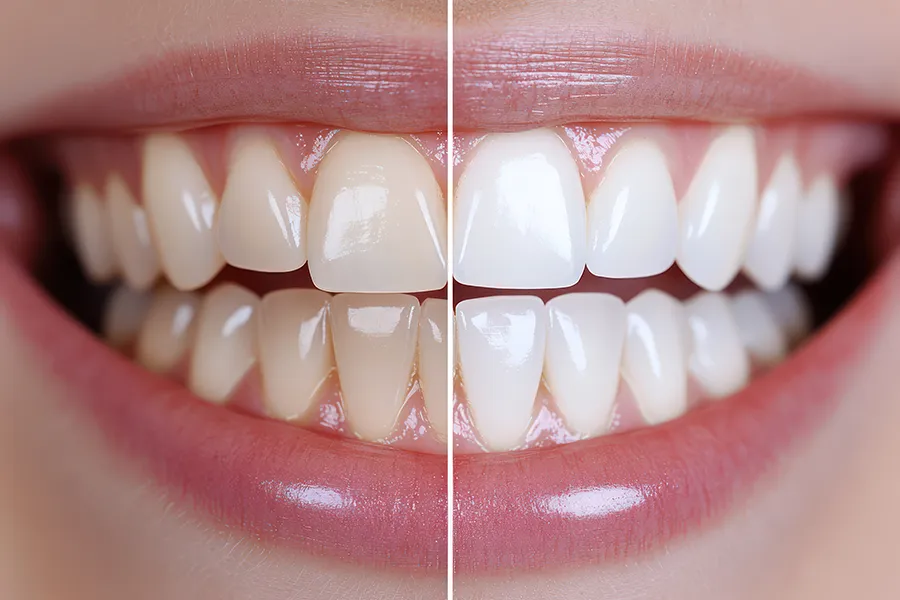
What Is Internal Bleaching?
Internal bleaching—sometimes called non-vital bleaching or intracoronal bleaching—is a whitening procedure performed from inside a tooth that has already undergone root canal therapy.
Unlike conventional teeth whitening, which places bleaching agents on the external surfaces of the teeth, internal bleaching places a whitening material within the treated tooth. This allows the discoloration to be addressed closer to its source.
The objective is to gradually lighten the tooth so its appearance blends more naturally with the surrounding teeth.
Why Does a Tooth Become Dark or Discolored?
There are several reasons an individual tooth may become darker than neighboring teeth.
One of the most common is dental trauma. A fall, sports injury, accident, or impact to a tooth can damage the dental pulp and cause changes in color—sometimes months or even years after the original injury.
Discoloration may also occur because of:
- Previous trauma to the tooth
- Pulpal injury or necrosis
- Internal bleeding following an injury
- Changes associated with previous root canal treatment
- Materials or debris remaining within the pulp chamber
- Changes within the tooth structure over time
Because discoloration can sometimes indicate an underlying endodontic problem, determining why the tooth changed color is an important first step.
Why See an Endodontist for a Darkened Tooth?
A dark tooth isn't always simply a cosmetic concern.
Before recommending internal bleaching, our endodontists evaluate the tooth to determine the condition of the root canal treatment, surrounding bone, root structure, and supporting tissues.
If the tooth has not previously received root canal treatment, discoloration may be associated with damage or loss of vitality within the dental pulp. In that situation, the underlying endodontic condition must be properly diagnosed and addressed before cosmetic treatment is considered.
If a root canal has already been performed, we can evaluate whether the existing treatment appears healthy or whether endodontic retreatment may be necessary before bleaching.
At Eastlake Endodontics, our priority is always the health of the tooth first, appearance second.
Who May Be a Candidate for Internal Bleaching?
Internal bleaching may be appropriate when:
- One tooth is noticeably darker than adjacent teeth
- The tooth has previously received root canal therapy
- The discoloration originates from within the tooth
- The tooth and surrounding tissues are otherwise healthy
- The existing root canal treatment is satisfactory
- A conservative cosmetic solution is preferred
Not every discolored tooth is a candidate. Dr. Lepure or Dr. Rezaei will examine the tooth and recommend treatment based on your individual diagnosis.
How Internal Bleaching Works
Internal bleaching typically involves a series of carefully controlled steps.
1. Evaluation and Diagnosis
Your endodontist first evaluates the tooth clinically and radiographically. Advanced imaging may be recommended when additional information about the root, previous treatment, or surrounding structures is needed.
2. Accessing the Tooth
For a previously root canal-treated tooth, a small opening is made through the back or biting surface of the tooth to access the internal chamber.
3. Protecting the Root Canal
An appropriate protective barrier is placed to separate the bleaching material from the root canal filling and deeper structures of the tooth.
4. Placing the Whitening Material
The bleaching material is carefully placed inside the tooth and temporarily sealed.
5. Monitoring the Color
Internal whitening is generally a gradual process. Additional appointments or applications may be necessary depending on the severity of discoloration and how the tooth responds.
6. Final Restoration
Once an appropriate shade has been achieved, the bleaching material is removed and the access opening is restored. Your endodontist may coordinate with your general or restorative dentist regarding the final restoration when appropriate.
A Conservative Approach to Improving a Dark Tooth
One of the greatest advantages of internal bleaching is its conservative nature.
Alternative cosmetic treatments for a dark tooth can include veneers or crowns. While these can be excellent solutions in appropriate circumstances, they generally require modification of the natural tooth.
When clinically appropriate, internal bleaching may improve the color of a root canal-treated tooth without covering it with a restoration solely for cosmetic purposes.
The best treatment depends on the health, structure, existing restorations, and degree of discoloration of the individual tooth.
Internal Bleaching vs. Traditional Teeth Whitening
Although both procedures are intended to lighten teeth, they address different types of discoloration.
Traditional teeth whitening works primarily on discoloration affecting vital teeth and is applied externally to the enamel.
Internal bleaching treats discoloration originating within a non-vital, root canal-treated tooth.
This distinction is important. If one tooth has become significantly darker following trauma or root canal treatment, simply whitening all of the teeth may not correct the underlying color difference.
What Results Can I Expect?
The amount of improvement varies from patient to patient. Factors such as the cause, severity, and duration of the discoloration can influence how the tooth responds.
Our goal is not to create an unnaturally white tooth. Instead, we aim for a natural-looking improvement that helps the treated tooth blend with the surrounding smile.
Some teeth respond quickly, while others may require multiple applications. In certain cases, complete color matching may not be achievable with internal bleaching alone, and additional restorative treatment may be recommended.
Internal Bleaching After Dental Trauma
A tooth that changes color following an accident deserves professional evaluation even if it doesn't hurt.
Dental trauma can damage the pulp without producing immediate symptoms. Over time, the affected tooth may become gray, brown, or darker than adjacent teeth.
Our endodontists can determine whether the pulp remains healthy, whether root canal therapy is indicated, or whether a previously treated tooth may benefit from internal bleaching.
This makes internal bleaching particularly relevant for patients who have experienced sports injuries, falls, automobile accidents, or other dental trauma.
Advanced Endodontic Care at Eastlake Endodontics
Internal bleaching is just one component of the specialized care available at Eastlake Endodontics.
Dr. Christian Lepure and Dr. Ghazaleh Rezaei focus exclusively on endodontics and provide advanced diagnosis and treatment for conditions affecting the dental pulp and root canal system.
Our specialty services include root canal therapy, endodontic retreatment, apical surgery, cracked tooth treatment, dental trauma care, and endodontic emergencies.
When appropriate, we also work closely with your referring or restorative dentist to coordinate care and achieve the best combination of health, function, and aesthetics.
 >
>